

ABOUT ME
HELLÄHILL is a Finnish DJ whose sound lives between underground minimalism and dancefloor-focused house music.
Known for longer, seamless blends and patient energy-building, she skillfully combines minimal house, deep tech, and tech house into journeys driven by rolling basslines, subtle tension, and carefully selected tracks. Her sets are designed to evolve naturally, creating space for groove, atmosphere, and unexpected moments.
HELLÄHILL is passionate about showcasing music that deserves to be discovered. Her selections often feature underground artists, fresh releases, and hidden gems that bring personality and depth to the dancefloor experience.
In addition to actively performing, HELLÄHILL is a resident DJ and co-founder of Deep End, a collective dedicated to creating immersive electronic music events and highlighting deeper, less represented corners of the scene. She also hosts a monthly residency on Ibiza Stardust Radio, sharing her sound with an international audience.
Since launching her DJ career, she has performed at clubs, underground festivals and events, terraces, and radio broadcasts throughout Finland. Her mixes have been featured locally on radio channels YleX, Konekellari, and the global Ibiza Stardust Radio.
Whether playing a warm sunset terrace set or a dark late-night club session, HELLÄHILL brings together groove, atmosphere, and underground energy in a way that feels both intentional and deeply personal.
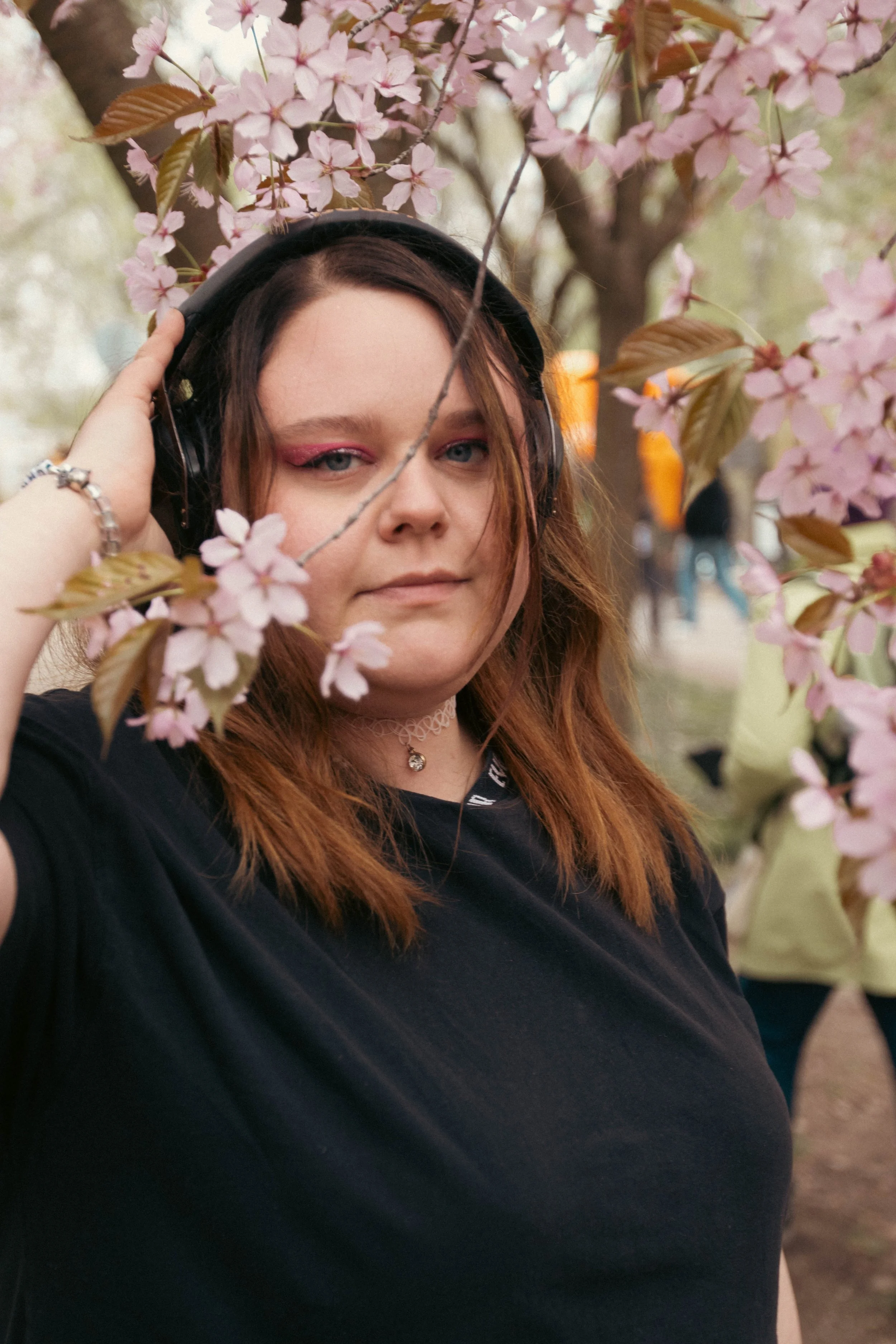
The Story Behind HELLÄHILL
How I stopped trying to disappear
I didn’t become HELLÄHILL because I had always believed I was destined for something extraordinary.
I became HELLÄHILL because, for a long time, I didn’t feel like I was going anywhere at all.
Before HELLÄHILL
My starting point wasn’t confidence, ambition or a carefully designed career plan. It was a rough childhood. It was being bullied. It was growing up with fear, shame and the feeling that there was something about me that needed to be hidden.
When I was younger, being seen felt terrifying.
I played bass during grades seven to nine and performed at school, but I was so afraid of being observed that I would sit down and try to cover myself. I wanted to take part, but I also wanted to disappear. That contradiction followed me for years: part of me wanted to express something, while another part was convinced that taking up space was dangerous.
Music Was Always There
Music was present throughout all of this.
Around 2006, I found emo music and the culture surrounding it. Concerts became more than entertainment. They helped me regulate things I didn’t yet know how to explain. Music gave me something to wait for and somewhere to put emotions that otherwise had nowhere to go.
Since approximately 2008, music has probably been the one thing I have consistently been willing to spend my money on. Even during the periods when the rest of my life was chaotic, music remained.
But having music in my life did not mean that my life was easy.
For years, I struggled with addictions, difficult relationships and an overall quality of life that was far below what I wanted — or what anyone deserves. There were periods when I wasn’t really building a life. I was surviving one, escaping from one or simply accepting circumstances that were hurting me because I didn’t know how to believe in anything better.
When you grow up learning that pain, instability or rejection are normal, you can end up carrying that definition of “normal” into adulthood. You may tolerate things that slowly destroy you. You may seek relief wherever you can find it, even when that relief comes with consequences of its own.
And sometimes, the hardest thing isn’t admitting that your life is difficult.
It is realizing that you have become used to it.
My mind can be both an extraordinary source of intensity and a place that requires very deliberate care. I have had to learn that determination alone doesn’t make me invincible. Rest matters. Balance matters. The people around me matter. The conditions in which I try to build something matter.
My story isn’t a clean before-and-after transformation where everything difficult disappeared and I became a completely different person. I still carry parts of where I came from. I still have moments of doubt, fear and exhaustion. I am still learning how to work with my mind instead of constantly demanding more from it.
What changed was that I began to want a different life—and eventually, I started participating in creating it.
Learning to Take Up Space
Before becoming a DJ, I spent roughly ten years attending raves. I knew how dancefloors felt from the other side. I understood what music could do to a room and to an individual person. I knew the relief of disappearing into a crowd, the connection of sharing a moment with strangers and the strange intimacy of hearing exactly the right track at exactly the right time.
Then, in 2022, I began learning how to DJ.
At first, it wasn’t about becoming an artist, building a brand or getting booked. I simply wanted to learn. But something in me switched on very quickly.
For the first year and a half, I often practised for four to eight hours a day. I became obsessed—not only with being able to mix two tracks together, but with understanding why something worked. I wanted to learn phrasing, timing, track selection, equipment and crowd psychology. I wanted to understand tension and release. I wanted to know when to build energy and when to deliberately hold it back.
For perhaps the first time in my life, obsession wasn’t only taking something away from me.
It was building something.
DJing gave my intensity a direction. It gave my curiosity a structure. It made me want to become genuinely skilled at something—not because I needed to prove that I was better than anyone else, but because I finally discovered the satisfaction of proving to myself that I could learn.
When Obsession Became Purpose
I began as someone who had once tried to hide while performing at school. Then I found myself standing behind decks, responsible for the energy of an entire room.
That transition did not happen because my fear suddenly disappeared. It happened through repetition. Through open decks. Through practising alone. Through technical mistakes, awkward moments, difficult gigs, small victories and returning to the equipment again and again.
Every time I stepped behind the decks, I taught my nervous system something new:
You are allowed to be here.
You are allowed to be seen.
You are allowed to take up space.
You can survive making a mistake.
You can even become good at this.
HELLÄHILL began growing from those lessons.
The name eventually became more than a DJ alias. It became a place for parts of me that had previously seemed incompatible: gentleness and heaviness, sensitivity and ambition, darkness and humour, control and weirdness. My sound developed in the same way—dark, groovy and intentional, built around rolling basslines, long blends, patient movement and enough space for the music to breathe.
I don’t believe a DJ needs to demand attention every second. I think the dancefloor is a living organism. It breathes, shifts and responds. People should be allowed to dance wildly, stand still, take photographs, close their eyes or simply listen.
That belief comes partly from remembering what it was like to be the person who felt pressure to behave correctly. I don’t want music to become another place where people are told they are enjoying something the wrong way.
Over time, the private obsession started becoming a public life.
I went from practising alone to playing terraces, clubs, underground events, radio shows, private parties and festivals. Within one especially intense nine-month period, I performed around fifty times. I have travelled to play in cities across Finland. I have played to nearly empty spaces and packed dancefloors. I have been an opener, a headliner and everything in between.
I became a resident on Ibiza Stardust Radio and created my own show, Sidequest. I co-founded and built Deep End, a collective rooted in immersive electronic music, community and safer spaces. I began making my own music in Logic. I developed the HELLÄHILL Method so I could eventually help other people learn not only the technical side of DJing, but also confidence, creativity and the psychology of standing behind the decks.
None of these things appeared overnight.
They grew from hundreds and eventually thousands of hours of practice. They grew from listening carefully and remaining curious. They grew from accepting gigs, learning equipment, rebuilding after disappointments and continuing even when I felt behind everyone else.
They also grew from finally having ambition.
For much of my life, I wasn’t trying to become excellent. I was trying to get through the day. There is a huge difference between those two modes of living.
What HELLÄHILL Means Today
Now I know what it feels like to wake up with ideas.
I know what it is like to care deeply about improving. I know the frustration of hearing the distance between what I can currently create and what I want to create—and rather than seeing that distance as proof that I am incapable, I increasingly see it as somewhere I can travel.
I want to become exceptionally skilled.
I want to understand the music, the decks, the crowd and myself. I want to produce tracks that sound unmistakably like me. I want to keep discovering music other people haven’t heard. I want to play bigger stages, teach, build concepts and create opportunities with people whose values I respect.
But perhaps the greatest change is not what I have achieved.
It is that I now believe my life can go somewhere.
DJing did not erase my childhood, the bullying, the addictions, the difficult relationships or the years when my quality of life was poor. Music did not rescue me on its own. I had to make decisions. I had to leave things behind. I had to accept help, learn boundaries and take responsibility for building a life that would not constantly pull me back into survival mode.
What music gave me was a language, a direction and a reason to practise becoming someone I could trust.
HELLÄHILL is not a character designed to hide my past.
She is what happened when I stopped allowing that past to decide the size of my future.
I am not sharing this because I want anyone to feel sorry for me. I am sharing it because polished photographs, bookings and career announcements rarely show where a person began. They don’t show the frightened girl trying to hide herself during a school performance. They don’t show the years spent escaping, surviving or settling for too little.
And they don’t show the thousands of small decisions between that person and the woman who now walks onto a stage willingly.
I am still becoming her.
I am still learning when to push and when to rest. I am still finding out how far this can go. There is no finished version of HELLÄHILL waiting at the end of the story.
But now there is purpose.
There is ambition.
There is curiosity.
There is a life I actively want to participate in.
And there is an urge—stronger than anything I have felt before—to keep learning until I become truly, undeniably skilled at what I do.
This is where HELLÄHILL really came from.
Not from confidence, but from learning it.
Not from an easy life, but from finally deciding to build a better one.
Gentle ember. Heavy bass.
And this time, I am not trying to disappear.
Much love,
— HELLÄHILL